
Sound Isolation vs. Sound Treatment: The No-Nonsense Guide for Homes, Offices & Studios
If you lined your studio with Acoustic Panels and your mic still picks up traffic sound on the Ring Road, you’ve hit the classic mix-up: you’re treating reflections, not sealing sound.
This is the classic mix-up between soundproofing vs sound-absorbing. One stops noise from leaving or entering a room. The other tames echoes and sounds inside the room. They’re not the same and choosing the wrong acoustic solution it will only wastes your time and money.
At Sound Mute (serving Egypt and the Gulf), we design quiet, great-sounding spaces every day. Here’s the clear, practical breakdown so you can make the right call.
The Short Answer to your Question
- Soundproofing = Isolation. Block or reduce sound transmission through walls, doors, ceilings, floors, and windows. Think weight, airtightness, decoupling.
- Sound-Absorbing = Treatment. Reduce echo and reverberation inside the room for clarity and comfort. Think acoustic panels, bass traps, ceiling clouds.
You often need both, but they solve different problems.
Why People Get Confused
The Number one reason will be False Marketing. Many “Acoustic Foam” products promise quiet rooms, but foam is lightweight. Light materials don’t block sound well they absorb reflections.
If the problem is “I hear traffic or my neighbor complain about my studio noise,” foam won’t fix it.
or you may think to yourself and say maybe a better “engineered panels” will help but you are absolutely wrong.
After more than ten years in acoustics, the number-one misconception I see is that acoustic foam ‘soundproofs’ a room. It doesn’t. Polyurethane foam absorbs and damps sound waves making it great for acoustic treatment but true sound isolation requires high-density materials like rockwool as part of a properly sealed assembly. Eslam Fares, Sound Mute Senior Audio Expert
Soundproofing 101 (Isolation)
What it does: Stops sound from passing between spaces.
When you need it:
- Apartment music rooms or home studios where neighbors complain
- Offices that require speech privacy (meeting rooms, clinics)
- Bedrooms near busy streets, generators, or lift shafts
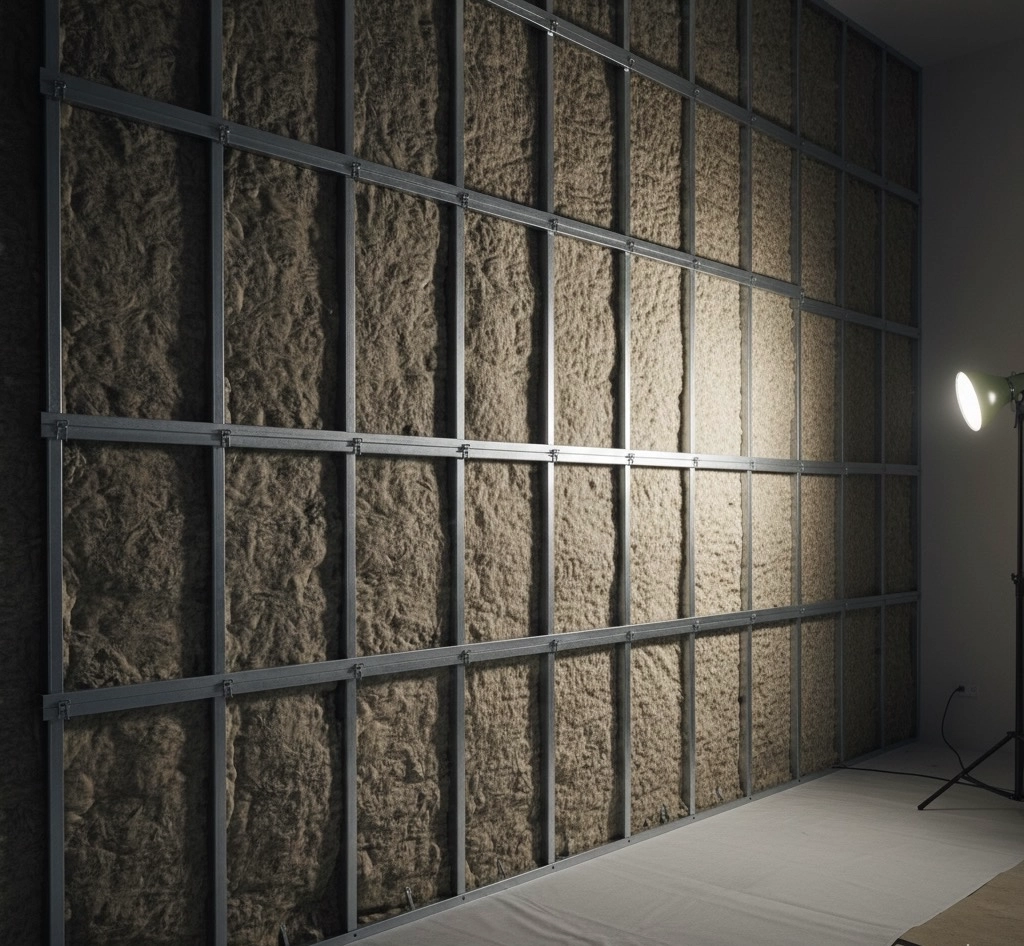
How it works:
- Mass: Heavier constructions block more sound (the “mass law”). Double gypsum layers, dense boards, laminated (triplex) glass View Our Triplix 4 Soundproof Glass.
- Airtightness: Sound slips through gaps. Seal outlets, door perimeters, window frames. Use acoustic sealant, door sweeps, and proper gaskets.
Typical solutions:
- Walls/Ceilings: Double-layer drywall with damping compound on resilient channels; mineral wool (e.g., rockwool) in cavities for some absorption inside the assembly
- Floors: Underlay + floating floor system to reduce impact noise
- Doors & Windows: Solid-core doors with perimeter seals and drop seals; laminated/“acoustic” glazing with tight frames View our Sound Isolation Doors
Note: Adding soft foam to a wall does almost nothing for isolation; it’s not a mass or airtightness solution.
Sound-Absorbing 101 (Treatment)
What it does: Makes the room sound better by controlling reflections and reverb.
When you need it:
- Echoey meeting rooms hurting call clarity
- Home studios where recordings sound “boxy”
- Open offices and restaurants where speech becomes fatiguing
How it works:
- Mid/High Absorption: Broadband panels made from dense acoustic wool (or equivalent cores) wrapped in fabric. Mounted at reflection points (walls/ceiling).
- Low-Frequency Control: Bass traps in corners and deep cavities manage modal build-up (boomy bass).
- Diffusion (optional): Scatters sound for a more natural ambience in larger rooms and live spaces.
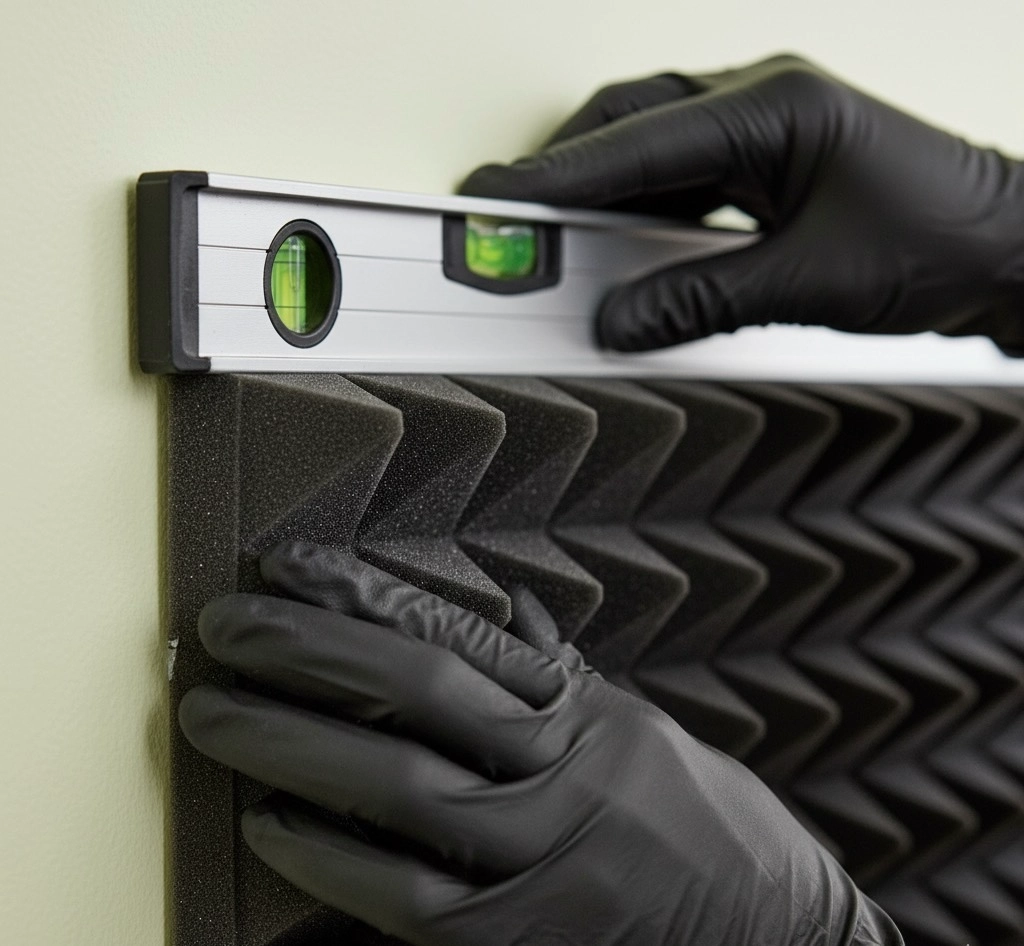
Typical products:
- Fabric-wrapped panels
- Ceiling clouds and baffles
- Corner bass traps
- Wood slat panels with absorber backing for mixed aesthetics+performance
The Metrics That Matter: STC vs NRC
- STC (Sound Transmission Class): A lab rating for isolation (how well a wall/door blocks airborne sound). Higher = better isolation.
- NRC (Noise Reduction Coefficient): A rating for absorption (how much a material reduces reflections). 0.80 NRC means ~80% of incident mid/high-frequency energy is absorbed under test conditions.
Rule of thumb:
If your problem is sound leakage between rooms, chase STC.
If your problem is echo inside the room, chase NRC.
Quick Decision Flow
- Can people outside your room hear you (or you hear them)? Yes → Prioritize soundproofing (mass, seals, decoupling).
- Is the room itself echoey or unclear? Yes → Prioritize sound-absorbing treatment (panels, clouds, traps).
- Both are true? Tackle isolation first, then tune the room with treatment.
Real-World Scenarios (What Actually Works)

- Home Podcast/YouTube Room (Cairo apartment): Start with door sealing and a solid-core upgrade if needed; add laminated glass for windows. Then install broadband panels at reflection points and a ceiling cloud above the desk. Result: quieter to the hallway + crisp recordings.
- Music Practice Room (villa in Giza): Build a decoupled wall/ceiling with resilient channels, double drywall, damping compound, and rockwool. Add bass traps and broadband panels to control room modes and flutter echo. Result: big reduction leaving the room + tighter sound inside.
- Open Office / Call Center (New Cairo / Dubai): Isolation between rooms may be fine; the problem is speech noise build-up. Add ceiling baffles/clouds and wall absorbers strategically to reduce RT60 (reverb time) and raise speech intelligibility.
- Baby Nursery Next to Street: Focus on windows: laminated glazing, airtight frames, and seals. Heavy curtains help a little with mid/high reflections, but true relief comes from better window isolation.
Cost, Mess & Timeline (So You Can Plan)
- Soundproofing often involves construction (dust, permits, downtime). It’s an investment with structural changes that deliver privacy and peace.
- Treatment is typically faster, cleaner, and reversible. Panels and clouds mount with minimal disruption and deliver instant clarity.
If you’re unsure, a site assessment saves money by targeting the real cause rather than guessing. Or Simply Contact Us to Get your Free Consultation Today 📞
Common Mistakes to Avoid
- Using Foam for isolation: Won’t stop the neighbor’s TV.
- Ignoring the door: A hollow or leaky door can nullify an expensive wall.
- Too little absorption: Three small panels rarely fix a lively room—calculate coverage for your volume and target RT60.
- Only high-frequency treatment: Without bass control, rooms still sound boomy (Bass Traps).
- No sealing: Tiny gaps = big leaks. Always seal perimeters and penetrations.
FAQ
Is acoustic foam good for soundproofing?
foam can add some absorption inside a room but provide minimal isolation due to low mass. For real soundproofing, think dense layers, sealed assemblies, and decoupling.
Do curtains or carpets soundproof a room?
They absorb some mid/high reflections; they do not significantly block street noise or loud neighbors.
Can I achieve both isolation and great acoustics in one go?
Yes, design the structure for isolation, then add treatment to tune the room. Many Sound Mute projects combine both phases smoothly.
What Sound Mute Recommend (Action Plan)
- Identify the primary pain: leakage vs echo (or both).
- Measure & inspect: doors, windows, wall types, weak paths, and current reverb.
- Design: choose isolation assemblies (if needed), then calculate absorber coverage and bass control.
- Install: start with isolation, follow with treatment.
- Verify: listen tests, optional measurements, and fine-tuning.
Ready to Hear the Difference?
Whether you’re setting up a professional recording studio, quieting a home office, or improving speech clarity in a meeting room, Sound Mute delivers complete sound isolation and acoustic treatment solutions across Egypt and the Gulf from consultation and design to turnkey installation.
📞Book a free acoustic consultation today and get a tailored plan for your space.
Prefer to DIY?
🛒Visit our store to shop acoustic panels, bass traps, ceiling clouds, door seals, laminated glass options, plus creator essentials from our RØDE microphones and Canon lineup certified and supported locally.
Get your custom acoustic plan now. Tell us your room size, current issues, and target use (podcast, music, office). We’ll recommend the right soundproofing (if needed) and a precise absorption package with clear pricing, timeline, and guaranteed results.